leave a message
If you are interested in our products and want to know more details,please leave a message here,we will reply you as soon as we can.

Picture this: a Category 4 hurricane barrels through your town. The wind howls like a freight train. Trees snap like twigs. And then—silence. No cell service. No internet. No power. Your smartphone, that sleek little rectangle you rely on for everything, becomes a very expensive paperweight.
For hundreds of thousands of people caught in hurricanes over the past few years, this wasn't a hypothetical. It was Tuesday.
 The Day the Signals Died
Hurricane Helene, which tore through the U.S. Southeast in September 2024, was the second-deadliest storm in U.S. history. It left a trail of devastation from Florida to North Carolina, but perhaps its most insidious impact was on communication. In western North Carolina and upstate South Carolina, crisis responders faced a daunting challenge: no power, no phones, no internet, no cell service—and even emergency service two-way radios were failing. Several counties became isolated, both physically and technologically.
Crisis communication plans built on websites, social media, reverse 911 phone calls, and mobile messaging were rendered completely useless.
So what do you do when every modern communication channel goes dark?
You go old school.
Enter the Radio Nerds
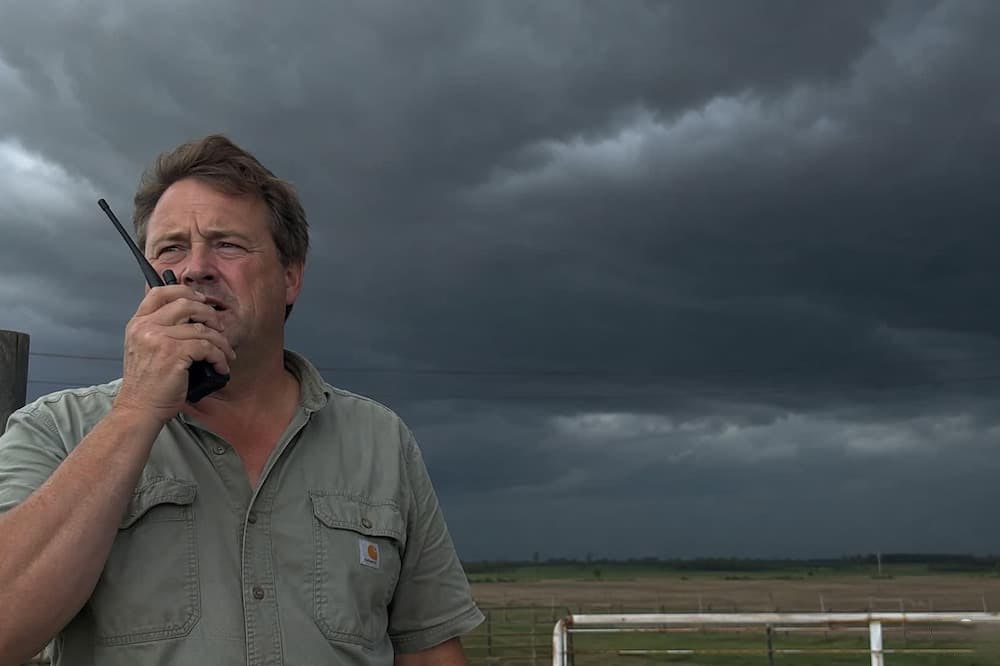
While the rest of us were staring at our dead phones in disbelief, a different breed of human was already on the air. Amateur radio operators—affectionately known as "hams"—fired up their equipment and started relaying messages when no one else could.
Here's the beautiful simplicity of it: ham radio doesn't need cell towers. It doesn't need the internet. It doesn't need the power grid (batteries and generators work just fine). As Michael Miles, trustee of the Deep East Texas Amateur Radio Club, put it: “When all else fails, internet goes down, phones are overloaded, this still works. There’s no infrastructure. It’s just radio to radio.”
Think about that for a second. No multi-billion-dollar fiber optic cables. No 5G towers. Just a radio, an antenna, and someone on the other end willing to listen. It's the communications equivalent of a handshake in a world obsessed with digital hugs.
The Numbers Don't Lie
The Hurricane Watch Net (HWN), founded way back in 1965, has been active for 156 landfalling hurricanes, including 60 major hurricanes (Category 3 or stronger). That's over half a century of keeping people connected when everything else fails.
When a hurricane threatens, the HWN activates on specific frequencies: 14.325 MHz (USB) by day and 7.268 MHz (LSB) by night. The amateur radio station at the National Hurricane Center—call sign WX4NHC—monitors these frequencies for real-time weather and situation reports.
Here's where it gets really interesting: during major storms, hams don't just chat about the weather. They relay surface observations directly into the National Hurricane Center, helping forecasters refine their predictions. In some cases, a single report from a ham radio operator has changed the forecast for landfall and impact.
More Than Just Weather Reports
After Hurricane Helene, the Amateur Radio Club of Augusta didn't just sit around waiting for the power to come back. Club president Marion Butler conducted 25 wellness checks himself, letting worried families know their loved ones were safe. The club tracked gasoline tankers from the pipeline terminal to gas stations, then relayed that information so people knew where to find fuel. They even sent operators to Tennessee to help medical teams communicate as they provided assistance.
This isn't theoretical. This is life-saving stuff.
In Puerto Rico, after Hurricane Maria left parts of the island with no power, gas, or communication services, a group of 50 volunteer ham radio operators landed on the island with repeater systems to help police, fire, and emergency services get back online. A second wave followed with high-speed systems capable of transmitting health and welfare information back to the U.S. mainland.
Your Phone vs. A Radio: No Contest
Let's be honest for a moment. How many of us have been in a crowded stadium or concert and watched our phones become completely useless because the network was overloaded? Now imagine that on a regional scale, with cell towers literally blown over.
Two-way radios like FRS or GMRS work well for short-range updates if cell service goes down. But for long-range communication when other systems fail, ham radio is in a league of its own. CB radios also have their place—Channel 9 is reserved for emergencies, and they work off vehicle power or batteries.
But here's the kicker: during Hurricane Helene, mountainsides washed away, yet the repeaters on top were still working. Licensed amateur radio operators took to the air using their own equipment to provide a link of information that no other means could.
The 2026 Season: Are We Ready?
NOAA's outlook for the 2026 Atlantic hurricane season predicts an 8-14 named storms, with 3-6 expected to become hurricanes. That's below-normal activity overall—but as anyone who's lived through a hurricane knows, it only takes one.
The amateur radio community isn't taking any chances. The 2026 National Hurricane Conference in Orlando featured dedicated sessions on amateur radio collaboration. The Hurricane Watch Net continues to train new net control operators, and the VoIP Hurricane Prep Net runs weekly on Saturdays at 8 PM EDT.
What You Can Do (Yes, You)
Here's the part where I get on my soapbox for a minute. Amateur radio isn't just for tech geeks with basements full of blinking equipment. Anyone can get licensed. The entry-level Technician license requires passing a 35-question exam—and the learning really happens in the first year after you get your license.
Keisa Liu, a licensed operator in Hawaii with the call sign WH6HEJ, put it perfectly: “People think radio is outdated. But it isn’t. It is resilient. It’s what we use when other communications fail or get overwhelmed, especially during times of emergency.”
Her 9-year-old son is currently studying for his technician license. If a 9-year-old can do it, so can you.
The Bottom Line
Modern communication is amazing—when it works. But hurricanes don't care about your 5G coverage map. They don't respect your fiber optic cables. They flatten cell towers like they're made of cardboard.
In those moments, when the digital world goes dark, something remarkable happens: a network of volunteers, armed with radios and powered by nothing more than batteries and a sense of duty, step up to fill the gap. They're not waiting for a government rescue. They're not hoping someone else will figure it out. They're already on the air, relaying messages, coordinating rescues, and letting people know their loved ones are safe.
The Hurricane Watch Net's motto is simple: “When All Else Fails.” It's not a boast. It's a promise.
And in a world where we've come to expect instant connectivity at all times, there's something deeply reassuring about knowing that when the signals go down, the radios—and the people behind them—are just getting started.



 IPv6 network supported

 Get a Quote