
leave a message
If you are interested in our products and want to know more details,please leave a message here,we will reply you as soon as we can.
If you've ever stared at your dual-band handheld transceiver and wondered whether enabling that "dual watch" or "dual receive" feature is going to turn your battery into a sad, deflated balloon in half the time — you're not alone. It's one of those questions that keeps ham radio operators up at night. Well, maybe not literally, but it's definitely a frequent flyer in online forums and pre-field-day gear checks.
So let's cut through the speculation and get to the facts. The short answer is: no, monitoring both VHF and UHF simultaneously does NOT double your battery consumption in most cases. But as with everything in radio, the devil is in the details — and the details depend heavily on how your radio implements dual-band monitoring.
First, Let's Clear Up the Terminology
Before we dive into milliamps and battery math, we need to distinguish between two very different features that often get lumped together under vague marketing terms like "dual standby" or "dual watch."
Dual Watch (DW) is essentially a fast-scrolling scan between two frequencies. Your radio has one receiver that rapidly toggles back and forth between your selected VHF and UHF channels, checking each for activity. It's like a lifeguard rapidly scanning left and right — they're not really watching both ends of the pool simultaneously, just switching their attention so quickly it feels that way.
True Dual Receive, on the other hand, means your radio has two separate receiver chains inside. Both are active at the same time, processing audio from VHF and UHF independently. This is more like having two lifeguards — one watching each end of the pool. Radios with true dual receive are typically more expensive, and they do consume more power because there's simply more hardware running.
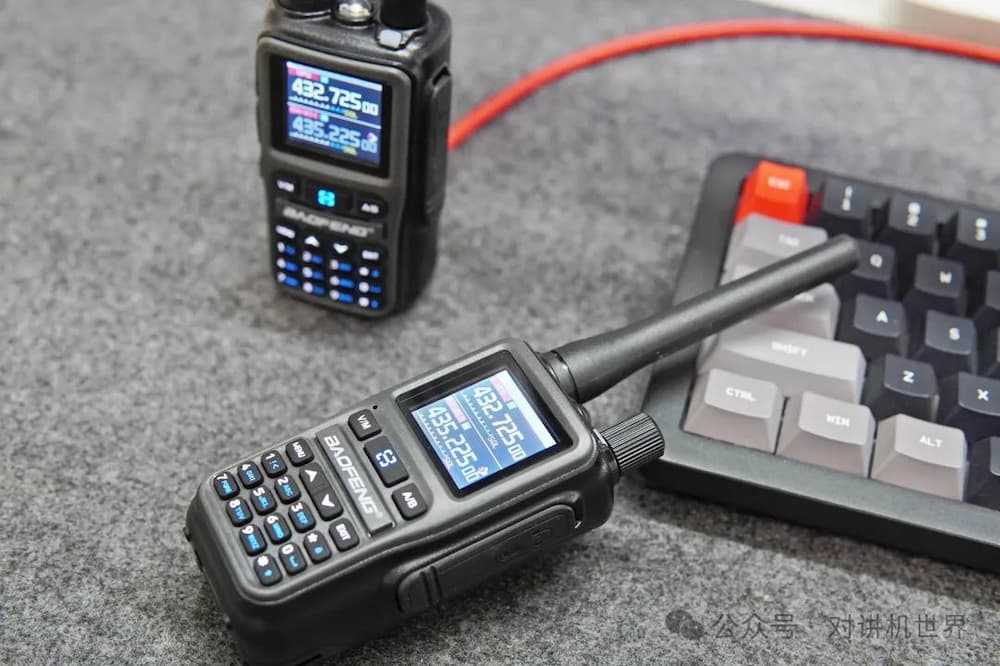
The critical distinction? Most affordable dual-band handhelds you'll find on the market — including the beloved BaoFeng UV-5R and its many cousins — use Dual Watch, not True Dual Receive.
The Power Numbers: What Actually Happens
Let's look at some real-world figures. For a typical dual-band handheld like the BaoFeng UV-5R, the current draw in standby is around 75 mA, and during active reception, it jumps to about 380 mA. When you enable Dual Watch, the radio isn't suddenly running two receivers — it's just switching between frequencies faster than your ears can notice.
According to actual user measurements, dual channel watch has no measurable impact on current draw. The radio's power consumption remains essentially the same as when you're parked on a single frequency in standby mode.
Why? Because the receiver is still the same single piece of hardware. When it's not actively receiving a signal, it's either in power-save mode or quickly polling between channels. The polling itself requires negligible additional power compared to the baseline consumption of keeping the receiver circuitry alive.
For comparison, a Yaesu FT-65R draws about 205 mA during receive and only 100 mA in standby with power-saver off. Enable power-saver, and that drops to just 18 mA. Dual Watch doesn't fundamentally change these numbers — the radio is still doing essentially the same amount of work.
The True Dual Receive Exception
Now, if your radio does have true dual receive — think higher-end models like the Powerwerx TR-590 or certain Icom and Yaesu offerings that advertise "simultaneous dual receive" — the story changes.
With two receivers running concurrently, you're literally powering two complete sets of radio-frequency circuitry. The current draw will be higher than single-receiver operation. But even here, it's not a simple doubling. The additional receiver might add anywhere from 50% to 100% of the base receive current, depending on the design and how efficiently the radio manages power distribution.
A radio with true dual receive might draw, say, 220 mA in single-receive mode and 350-400 mA in dual-receive mode. That's an increase, certainly — but it's not a clean "twice as much" scenario. The power supply, display, audio amplifier, and other shared components don't magically double their consumption just because a second receiver is active.
But What About Scanning?
This is where things get interesting—and where a lot of the confusion arises.
If you’re scanning through multiple channels instead of just monitoring two of them, power consumption can actually decrease slightly. Why? During the scanning process, the receiver is periodically turned off while the radio adjusts to different channels. This intermittent operation means that the radio spends less time with the receiver fully active, thereby reducing average power consumption compared to when it’s constantly operating on a single channel.
Ironically, scanning 50 channels might consume less power than constantly monitoring one channel with a strong signal that keeps breaking through the squelch function. Radio operates in strange ways like that.
The Real Battery Killers
If you're worried about battery life, here's a reality check: transmitting is what really drains your battery. A 5-watt handheld can pull 1.4 to 1.7 amps during transmit. Compare that to the 75-200 mA you're drawing while receiving, and you'll see why the occasional overshoot matters far more than whether you're in dual watch mode.
Your display backlight? That can add 20-50 mA. Your roger beep? Negligible but annoying to other operators. Your choice to run high power instead of low power on a local repeater? That's the difference between your battery lasting all day versus conking out before lunch.
Practical Advice for the Field
Here's what I'd actually recommend if battery life is your primary concern:
The Bottom Line
So, does monitoring both VHF and UHF simultaneously double your battery drain? For the vast majority of dual-band handhelds on the market — those using Dual Watch with a single receiver — no, it doesn't even come close. The power difference is negligible to the point of being unmeasurable in practical use.
For the minority of radios with true dual receive, there is an increase, but it's typically not a doubling, and it's still dwarfed by the consumption of even a single transmission.
The next time someone tells you dual-watch kills batteries, you can confidently set them straight — and maybe throw in that bit about the lifeguards while you're at it. After all, radio is supposed to be fun, not a source of battery anxiety.
Now go forth, monitor both bands, and stop worrying. Your battery will be fine. Your sanity, on the other hand, might suffer from trying to follow two conversations at once — but that's a problem for another blog post.



 IPv6 network supported

 Get a Quote