
leave a message
If you are interested in our products and want to know more details,please leave a message here,we will reply you as soon as we can.
Introduction
If you manage a retail chain with stores spanning multiple provinces — or a logistics network connecting distribution centers across the country — you've likely encountered the same question: What is the most efficient, cost-effective communication tool for keeping everyone connected?
For decades, traditional two-way radios were the default answer. But as businesses expand geographically, the limitations of conventional VHF/UHF systems become painfully obvious. Today, a new contender has emerged: Public Network PoC (Push-to-Talk over Cellular) radios. The question is — are they truly the optimal choice for multi-province chain enterprises?
After evaluating the technology, costs, and real-world deployment cases, the answer is a clear yes. Here's why.
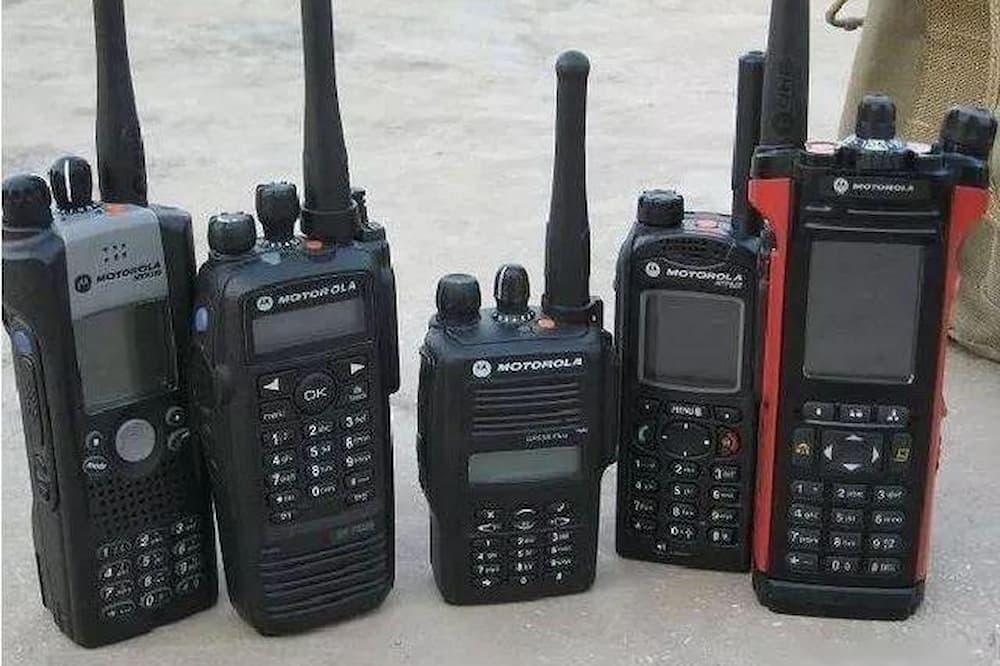
The Fundamental Problem: Traditional Radios Don't Scale
Let's start with the obvious. Traditional two-way radios — whether analog or digital DMR — rely on direct radio frequency transmission. In urban environments, effective range is typically 1 to 3 kilometers; even with repeaters, coverage rarely exceeds a few dozen kilometers. For a single warehouse or a small shopping mall, that's adequate. For a chain with stores in New York, Los Angeles, and Chicago? It's practically useless.
To extend coverage across provinces using traditional radio, you would need to build your own repeater network — installing base stations, leasing tower space, obtaining frequency licenses, and maintaining infrastructure across every location. The capital expenditure alone is prohibitive for most enterprises, not to mention the ongoing operational costs and regulatory complexities.
PoC radios solve this problem at the architectural level. Instead of transmitting over VHF or UHF frequencies, PoC devices use public cellular networks (3G, 4G, 5G, or Wi-Fi) to deliver instant voice and video communication. Wherever there's cellular coverage — which, in China, means virtually everywhere — your team stays connected.
Why PoC Outperforms for Multi-Province Operations
1. Nationwide Coverage, Zero Infrastructure Investment
The most compelling advantage of PoC for chain enterprises is unlimited geographical reach. A PoC radio doesn't care whether your store is in a provincial capital or a county-level city — as long as the cellular network is available, push-to-talk works.
This is not theoretical. Leading PoC solutions from manufacturers like Hytera, Motorola Solutions, and Talkpod enable nationwide group calling through cloud-based platforms such as Hytera HyTalk or Motorola WAVE PTX. A headquarters manager can broadcast a promotional update to 200 stores simultaneously with one button press. A regional supervisor can coordinate emergency response across three provinces in real time.
Traditional radios? They can't even reach the next city.
2. No Frequency Licensing, No Repeaters, No Headaches
In many markets, operating traditional two-way radios requires frequency licenses — a time-consuming, often expensive regulatory process. PoC radios operate on public cellular networks, eliminating this barrier entirely. There's no need to apply for spectrum, no need to coordinate frequencies across different provinces, and no need to worry about interference from other users.
Deployment is as simple as inserting a SIM card, powering on the device, and configuring talk groups through a centralized management portal. For chain enterprises with high employee turnover — a common challenge in retail and hospitality — this plug-and-play simplicity is invaluable.
3. Cost Efficiency: Lower TCO, Higher ROI
Some procurement managers worry about the recurring cost of cellular data plans. But when you compare total cost of ownership, PoC consistently comes out ahead.
Traditional wide-area radio systems require significant upfront investment in repeaters, antennas, cabling, and installation. For a chain with 50 locations across 10 provinces, you're looking at hundreds of thousands of dollars in infrastructure — before you've bought a single handheld radio.
With PoC, there is no infrastructure to build. You purchase the devices, subscribe to a data plan (which, in most markets, costs a few dollars per device per month), and you're operational. The devices themselves are often priced competitively with — or even lower than — comparable digital radios.
The math is straightforward: lower capital expenditure, predictable operational costs, and no stranded assets when you close or relocate a store.
4. Beyond Voice: Multimedia and Smart Dispatch
Modern PoC radios are not "just walkie-talkies." They are smart communication terminals that integrate voice, video, GPS tracking, text messaging, and emergency alerting into a single device.
For a chain enterprise, this translates into tangible operational benefits:
GPS location tracking allows headquarters to visualize the real-time position of delivery vehicles, mobile teams, and store personnel.
Video transmission enables field staff to share visual evidence of inventory issues, equipment failures, or safety incidents instantly.
Emergency SOS buttons with automatic location reporting provide an additional layer of staff safety — particularly valuable for lone workers or late-night shifts.
Centralized dispatching platforms allow managers to configure talk groups, monitor communication activity, and push remote updates to hundreds of devices simultaneously.
Traditional radios offer none of these capabilities.
Real-World Validation: Chain Enterprises Are Already Making the Switch
The market has already voted. Across retail, hospitality, logistics, and security, chain enterprises are adopting PoC at accelerating rates.
Consider a typical large-scale supermarket chain: stores are large, with multiple zones (receiving, storage, sales floor, checkout) that create natural signal barriers. Traditional radios struggle with concrete walls and metal shelving. PoC radios — particularly those with Wi-Fi fallback — maintain seamless communication even in basements and back-of-house areas.
For restaurant chains, the value proposition is equally clear. A national brand can use PoC to coordinate menu changes, promotional campaigns, and supply chain adjustments across all locations in real time. Store-level staff benefit from noise-canceling audio that cuts through kitchen clatter.
Logistics providers with cross-province delivery networks use PoC to maintain constant contact between dispatch centers, distribution hubs, and drivers on the road. When a vehicle breaks down or traffic diverts, the driver reports instantly — and headquarters coordinates alternative resources within minutes.
These are not future use cases. They are happening today.
When Is PoC Not the Answer?
No technology is perfect for every scenario. PoC has two primary limitations that enterprises should acknowledge:
Cellular dependency. If your operations frequently take place in remote areas with poor or no cellular coverage — deep mines, offshore platforms, vast wilderness — PoC radios become ineffective. In such cases, professional digital radios (DMR/PDT) or hybrid devices that combine PoC with narrowband radio may be more appropriate.
Network congestion. During major public events or natural disasters, cellular networks can become overloaded. For mission-critical public safety operations, dedicated private networks remain the gold standard. For commercial chain operations, however, this risk is manageable and rarely materializes in day-to-day business.
Conclusion: The Optimal Choice for Most Chain Enterprises
For a multi-province chain enterprise with distributed operations, diverse teams, and a need for instant, reliable communication across geographical boundaries, public network PoC radios are not just a good option — they are the optimal choice.
They offer:
Unlimited range without the need for proprietary infrastructure
Rapid deployment with no frequency licensing or complex setup
Lower total cost of ownership compared to wide-area radio systems
Rich feature sets that extend far beyond voice communication
Proven real-world adoption across retail, logistics, hospitality, and security
Traditional two-way radios still have their place — for single-site operations, for environments without cellular coverage, and for applications requiring ultra-low-latency private networks. But for the modern chain enterprise operating across provinces, the future of team communication is already here. And it runs on the public network.
The question is no longer whether to consider PoC. The question is which PoC solution best fits your specific needs — and how quickly you can deploy it.



 IPv6 network supported

 Get a Quote