
leave a message
If you are interested in our products and want to know more details,please leave a message here,we will reply you as soon as we can.

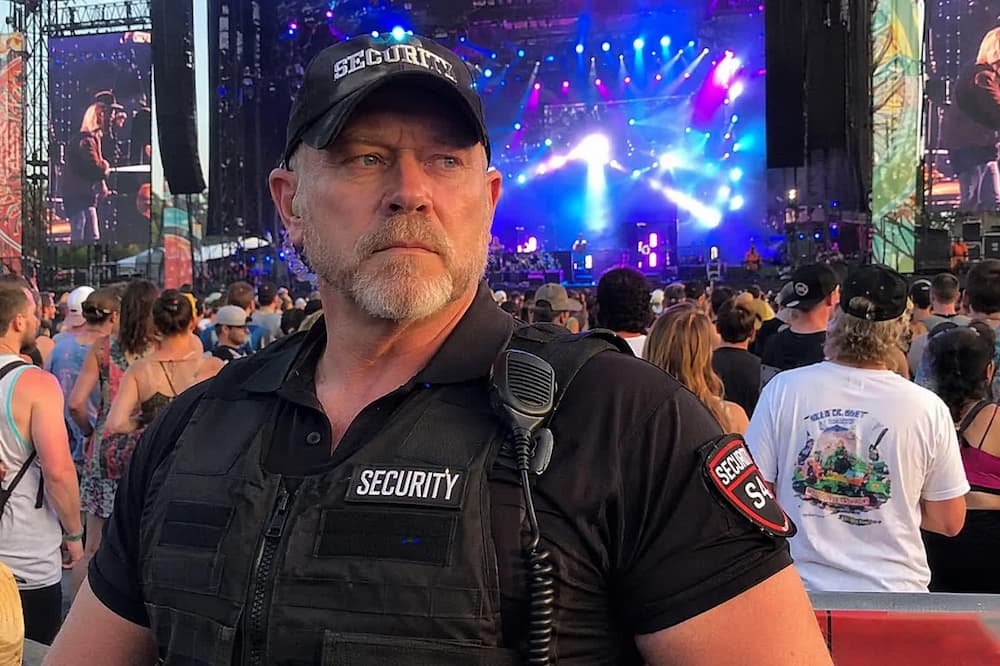
Imagine this: a headliner is about to take the main stage. Backstage, the stage manager radios the lighting team for a cue—but static crackles through the speaker. The security lead at the north entrance tries to report a crowding issue, but the message never reaches the command centre. Meanwhile, paramedics at the medical tent cannot reach the logistics team to request additional supplies. In a sprawling outdoor festival ground with tens of thousands of attendees, a single communication failure can cascade into chaos.
Outdoor music festivals are among the most demanding environments for professional wireless communication. The combination of open terrain, dense crowds, metal structures, multiple stages, and intense electromagnetic interference from lighting and sound systems creates a perfect storm for signal attenuation and coverage gaps. For event organisers, the stakes could not be higher: when walkie‑talkies fail, safety is compromised, operations grind to a halt, and the audience experience suffers.
In a festival with tens of thousands of attendees, the communication network is not a luxury—it is a lifeline. Security teams rely on instant voice channels to monitor crowd density and respond to incidents. Medical personnel need priority access to coordinate emergency evacuations. Stage crews, sound engineers, lighting technicians, and logistics teams all operate on separate yet interconnected channels.
When communication breaks down, the consequences are immediate and tangible. In one documented case at a stadium concert, security radios dropped out repeatedly, leaving the stage area, entrance gates, and parking zones unable to coordinate. The root causes are well understood: thousands of radios operating simultaneously, interference from mobile base stations, frequency conflicts with drone equipment, and signal attenuation caused by metal structures and dense crowds. For a festival spread over hundreds of acres with multiple stages, these challenges are amplified exponentially.
The answer lies not in more powerful handheld radios alone, but in a strategically deployed high‑power digital repeater—a dedicated base station that receives, amplifies, and retransmits radio signals across the entire venue. Think of it as the “brain” of the on‑site wireless communication system, responsible for receiving and forwarding signals so that all staff members stay connected via their radios.
Unlike consumer‑grade walkie‑talkies that rely on direct line‑of‑sight communication, a professional digital repeater system extends coverage from a few kilometres to 20–50 km or more. With output power reaching 50 W or higher, these devices can penetrate concrete walls, metal barriers, and dense crowds—ensuring that a crew member at the back of the festival can communicate clearly with a stage hand at the front, even with thousands of people in between.
But raw power is only part of the equation. Modern digital repeaters leverage DMR (Digital Mobile Radio) technology and TDMA (Time Division Multiple Access) to maximise spectral efficiency. By splitting a single frequency channel into multiple time slots, TDMA allows multiple groups of users to communicate simultaneously on the same frequency—effectively doubling capacity without requiring additional spectrum. In a festival environment where dozens of teams need dedicated channels, this capability is transformative.
A high‑power digital repeater is not a simple signal booster—it is a sophisticated RF relay system. With 50 W output power and dual‑frequency isolation filtering, it ensures stable, interference‑free signal propagation across the entire festival grounds. In one large‑scale music festival, the main stage, audience area, back‑of‑house zones, and emergency corridors all had different communication needs; the multi‑frequency radio system automatically detected environmental changes, intelligently adjusted the network architecture, and ensured that every team member could communicate without interruption.
Real‑world impact: At the 2025 Oxygen Music Festival in Hangzhou—which attracted 15,000 attendees across a main stage, interactive zones, dining areas, and emergency corridors—a single digital repeater paired with 50 multi‑mode radios delivered full‑site coverage and seamless multi‑team coordination.
Festival grounds are electromagnetic battlefields. Lighting rigs, massive speaker arrays, thousands of mobile phones, and wireless microphones all compete for spectrum. Advanced digital repeaters employ intelligent frequency‑hopping technology that automatically detects interference, analyses congested bands, and switches to the clearest available channel in real time. Combined with digital noise‑cancelling microphones and AES‑256 encryption, critical communications remain crystal clear and secure—even when the bass is shaking the ground.
A music festival is a symphony of specialised teams: stage management, sound engineering, lighting, security, medical, logistics, artist relations, and media—each with distinct communication needs. A digital repeater supports multiple independent channels (up to 1,000 in some systems), allowing each team to operate on its own dedicated frequency while the command centre maintains the ability to broadcast all‑call emergency alerts across every channel simultaneously.
Real‑world impact: At a major New Year’s Eve concert with multiple simultaneous stages, this multi‑channel architecture enabled stage crews, sound teams, and lighting departments to coordinate independently on their own channels while the overall director maintained full situational awareness via the master channel.
Outdoor festivals expose equipment to rain, dust, temperature extremes, and accidental drops. Professional‑grade digital repeaters are built to MIL‑STD‑810 military standards, with IP54 dust and water resistance and operating temperature ranges from –30 °C to +60 °C. This durability ensures that the communication backbone remains operational through sudden downpours, scorching summer heat, and the inevitable bumps and knocks of a busy backstage environment.
Beyond the repeater itself, a complete festival communication solution includes dispatch management software that transforms raw voice communication into intelligent command and control. From a centralised console, operators can execute group calls, emergency overrides, call recording, real‑time location tracking, and historical route replay. This visibility turns a collection of individual radio users into a coordinated, responsive organisation—enabling command centres to make faster, better‑informed decisions.
The audience sees the lights, hears the music, and feels the energy. They never see the network of radios, repeaters, and dispatchers that makes it all possible. But without that invisible infrastructure, the seamless experience fans love would quickly fall apart.
For event organisers, venue operators, and security directors, the choice is clear: a high‑power DMR digital repeater system is not an expense—it is an investment in safety, efficiency, and audience satisfaction. When thousands of lives depend on clear, reliable communication, there is no room for compromise.



 IPv6 network supported

 Get a Quote