
leave a message
If you are interested in our products and want to know more details,please leave a message here,we will reply you as soon as we can.
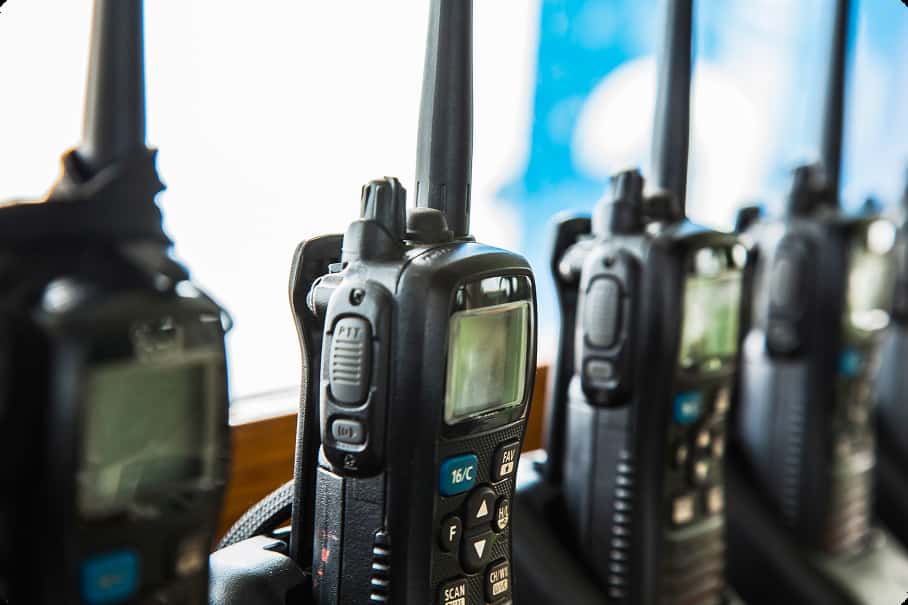
In two-way radio communications, unencrypted audio can be intercepted by anyone with a scanner. Proper encryption scrambles your voice so only users with the matching key can understand it. But not all encryption is equal. Let’s compare AES256 and ARC4—the two most common algorithms in modern radios.
How AES256 Encrypts Your Audio
AES (Advanced Encryption Standard) is the global gold standard, approved by the U.S. NIST and used by governments and militaries. AES256 is a block cipher that processes audio in 128‑bit blocks using a 256‑bit key. The key space is 2²⁵⁶—a number so vast that even supercomputers would take trillions of years to crack it.
Most professional digital radios (DMR, P25) implement AES256 with authenticated modes like GCM, which also verify data integrity. It secures not only voice but also GPS, text messages, and emergency alerts.
How ARC4 Encrypts Your Audio
ARC4 (Alleged RC4) is a stream cipher that encrypts one byte at a time. It was designed in 1987 for speed and simplicity. Most two-way radios implement ARC4 with a 40‑bit key (2⁴⁰ possibilities—about 1.1 trillion combinations). The algorithm XORs a pseudo‑random keystream with your voice data.
ARC4 is extremely fast and requires little computational power, making it attractive for legacy or battery‑sensitive devices. It also offers broad interoperability with older DMR fleets.
Critical Differences
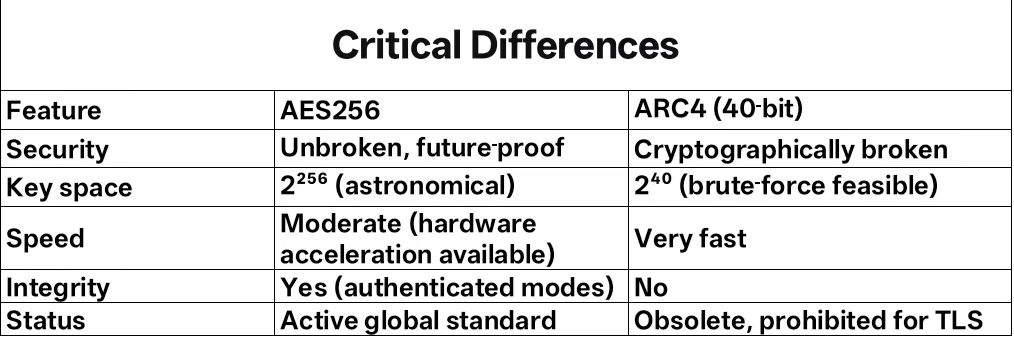
Cryptographic experts now consider ARC4 unsafe. Multiple biases in its keystream allow practical attacks. Python’s cryptography library and wolfSSL both list it as “broken.”
Which One Should You Choose?
Choose AES256 if:
Consider ARC4 only if:
Many modern DMR radios support dual encryption—AES256 for confidential tasks and ARC4 for daily use. This gives you flexibility without managing separate fleets.
Legal Note for Exporters
AES256 is subject to U.S. export controls (EAR/ITAR). Depending on the destination and end user, an export license may be required. Always consult compliance counsel before shipping AES256‑enabled radios internationally.
The Bottom Line
If you need genuine security, AES256 is non‑negotiable. ARC4 is a relic—fast and compatible, but cryptographically broken. Relying on 40‑bit ARC4 for any important communication is a serious risk. For organizations serious about protecting their airwaves, invest in radios with true AES256 encryption.



 IPv6 network supported

 Get a Quote