
leave a message
If you are interested in our products and want to know more details,please leave a message here,we will reply you as soon as we can.
If you’ve ever shopped for two‑way radios, you’ve probably asked the question: Are digital walkie talkies really better than analog? The short answer is that digital technology has leapfrogged analog in voice clarity, range efficiency, battery life, and features—but that doesn’t mean analog is dead. In this guide, I’ll break down exactly how the two technologies compare, where each still shines, and how to make the right choice whether you’re running a security team, managing a construction site, hiking in the backcountry, or just staying connected at a family farm. By the end, you’ll understand why so many businesses and enthusiasts are switching to digital—and where analog still makes perfect sense.
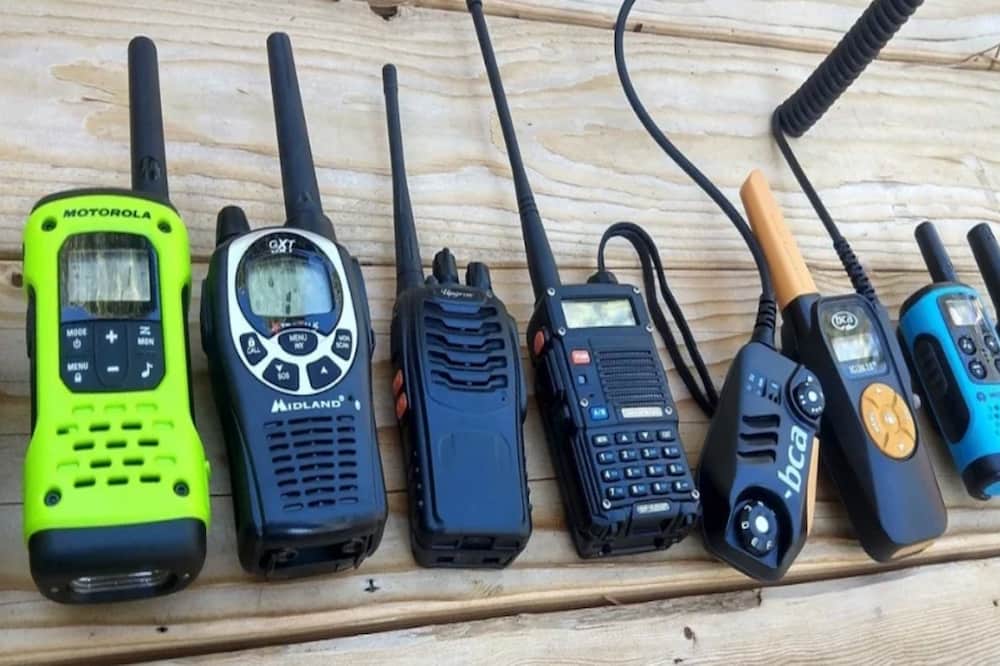
1. Understanding Analog Walkie Talkies
Analog two‑way radios have been the backbone of short‑range voice communication for decades. They work by converting your voice directly into a continuous radio wave. The receiver picks up that wave and turns it back into sound. It’s simple, proven, and incredibly straightforward.
Because analog technology is so mature, analog radios are typically more affordable upfront. They are also widely compatible—virtually any analog radio on the same frequency and CTCSS/DCS code can talk to another, regardless of brand. This is why many small restaurants, retail stores, event volunteers, and amateur radio enthusiasts still rely on analog radios. If your need is basic “push‑to‑talk” with a small team and you’re working within a tight budget, analog can still get the job done.
However, analog has clear limitations. As the signal weakens, voice quality degrades progressively: you get static, hiss, and garbled words until communication becomes impossible. Analog also carries background noise faithfully—construction equipment, wind, and engine roar all come through the speaker, making it hard to understand the person on the other end. Finally, an analog channel can only carry one conversation at a time, so spectrum efficiency is low.
2. What Are Digital Walkie Talkies?
Digital walkie talkies convert your voice into data packets—ones and zeros—and transmit those packets over radio waves. The receiving radio decodes the data and plays back a clean, synthesized voice. This is the same fundamental shift we saw from analog cassettes to CDs and from VHS to digital video. The most common professional digital standard today is DMR (Digital Mobile Radio), though you’ll also find dPMR, P25, and TETRA in niche applications.
Because the voice travels as data, digital radios can do much more than just transmit sound. They can correct transmission errors, suppress background noise intelligently, send text messages and GPS coordinates, and even encrypt calls so that casual eavesdroppers can’t listen in. For business users who handle sensitive information or need to coordinate large teams, these capabilities are game‑changers.
What often surprises people most is that digital radios extend the usable range. Analog radios become noisy and difficult to understand at the edge of coverage. A digital radio, on the other hand, maintains crystal‑clear audio right up to the point where the signal is completely lost. In practice, this gives your team an extra 20‑30% more usable communication area without adding any extra infrastructure—a massive benefit in large facilities, resorts, farms, or outdoor adventures.
3. Digital vs Analog: A Feature‑by‑Feature Breakdown
Analog audio gets progressively worse as you move toward the edge of your range. You’ll hear increasing static, pops, and broken words, making critical instructions hard to understand. Digital radios behave differently: the voice stays loud and perfectly clear until the signal is too weak to decode, at which point the call simply drops. There is no noisy middle ground. This characteristic alone can increase effective coverage area by roughly 20‑30% compared to an equivalent analog setup, which is why so many security, logistics, and outdoor recreation teams are making the switch.
Construction sites, factories, busy kitchens, and windy ridges all produce constant background noise that analog radios faithfully reproduce. With a digital radio, advanced noise‑cancellation algorithms actively separate the speaker’s voice from the surrounding din. The result is a voice transmission that sounds like the person is talking right next to you, even when they’re standing next to a running engine. For any operation where loud environments cause repeated “say again” moments, digital is the clear productivity booster.
This is where digital technology truly transforms fleet management. DMR digital radios use Time Division Multiple Access (TDMA), which splits a standard 12.5 kHz channel into two independent time slots. You get two simultaneous, completely separate conversations out of a single frequency license. That means you can, for example, dedicate one slot to maintenance and the other to housekeeping without buying additional spectrum. Spectrum is expensive in many countries, and this efficiency alone can justify the higher upfront cost of digital gear within the first year of operation.
Because an analog radio transmits continuously for the duration of your speech, it draws power the entire time. A DMR digital radio, thanks to the TDMA structure, only transmits during its assigned time slot—roughly half the time. Many manufacturers report up to a 40% increase in battery life on a single charge when comparing equivalent digital and analog handhelds. For long shifts, multi‑day hiking trips, or teams that constantly forget to dock their radios overnight, that extra runtime keeps people connected when it matters most.
Analog conversations are completely open. Any cheap scanner or a curious person with another analog radio can listen in. Digital radios, by contrast, encode voice into data streams. Pair that with basic encryption or even just the proprietary coding of a DMR system, and casual eavesdropping becomes practically impossible. For security firms, healthcare facilities, or any business transmitting sensitive client information, this shift from “anyone can listen” to “only your team can listen” is essential for compliance and operational integrity.
Analog does one thing: voice. A modern digital radio is effectively a wireless data terminal that also handles voice. You can send pre‑programmed text messages, trigger emergency alarms with GPS coordinates, query work‑order systems, or even integrate with location‑tracking dispatch consoles. These features cut down on voice channel clutter, create automatic audit trails, and dramatically improve lone‑worker safety—all without picking up a smartphone
There’s no denying that digital radios carry a higher per‑unit purchase price. However, many businesses find that the total cost of ownership tips in digital’s favor within two to three years, thanks to battery longevity, doubled channel capacity, and reduced time lost to miscommunication. On the interoperability front, analog still wins for sheer universal compatibility. That said, the DMR standard means digital radios from different reputable manufacturers can still interoperate seamlessly as long as basic parameters like frequency, color code, and talk group IDs are correctly matched. And if you’re not ready to leave analog behind, dual‑mode digital radios allow you to run both systems side by side during a gradual migration.
4. When Digital Walkie Talkies Are the Clear Winner
For businesses that depend on crisp, private, and feature‑rich communication, digital is no longer a luxury—it’s becoming the standard.
Hospitality & Security Teams: A hotel security guard can receive a silent vibration alert with a room number, coordinate with the front desk via text, and speak privately without guests hearing sensitive information on scanner apps.
Construction & Manufacturing: Loud environments make analog radios nearly useless. Digital noise cancellation pulls the speaker’s voice out of the din, and the ability to send a pre‑programmed text message like “Site supervisor needed at crane 3” cuts through confusion.
Warehousing & Logistics: With TDMA technology, one DMR frequency gives you two separate talk paths. You can dedicate one slot to the loading dock team and the other to inventory control without buying an extra frequency license. That doubles your capacity and often pays back the cost difference of digital equipment very quickly.
Outdoor Enthusiasts & Off‑Roaders: When you’re skiing, overlanding, or kayaking, background noise and fringe coverage are constant battles. Digital radios keep communications loud and intelligible at distances where analog would be useless. Programmable buttons and GPS sharing also add a layer of safety for groups moving through remote areas.
5. Do Analog Radios Still Have a Place?
Absolutely. It would be a mistake to write analog off completely. Analog radios remain the go‑to choice in several situations:
Tight budgets and simple needs: A small retail store with three employees who just need to say “Customer needs assistance at counter 2” doesn’t need encryption or texting. An analog radio that costs less than a team dinner does the job perfectly.
Compatibility with existing fleets: Many organizations have dozens or hundreds of older analog radios that still work fine. Swapping everything to digital overnight is expensive. Instead, companies often buy digital radios that offer an analog‑digital dual mode, allowing a gradual migration.
Amateur radio and community events: Ham radio operators love analog for its simplicity, and many local repeaters are still analog. Volunteer event organizers who borrow or rent radios also often find analog sets are easier to mix and match.
One‑time or short‑term use: For a weekend festival, buying cheap analog FRS radios might be more sensible than investing in digital gear that won’t be used again.
The key takeaway? Analog isn’t obsolete—it’s just no longer the only smart choice. Think of it like a trusty pickup truck: it does the basics reliably and affordably. Digital is the new‑generation utility vehicle with air conditioning, navigation, and advanced safety features.
6. How to Choose Between Digital and Analog for Your Use Case
Answer these five questions, and the right technology will usually become obvious:
If you’re still uncertain, a hybrid approach is the safest starting point. Many modern digital radios can operate in both digital and analog modes. You can use them on your legacy analog channels today and switch to digital frequencies when you’re ready, protecting your investment.
Conclusion: Better Doesn’t Mean One‑Size‑Fits‑All
So, are digital walkie talkies better than analog? For most users, unequivocally yes—they deliver superior audio, extended range, longer battery life, higher capacity, and a suite of data features that make teams safer and more productive. For mission‑critical communication where clarity and confidentiality matter, digital is the present and the future.
Yet analog remains an unbeatable value when your requirements are basic, your budget is minimal, or you need to maintain interoperability with an older fleet. The smartest users don’t pick a side permanently; they pick the right tool for their specific operation.
If you’re ready to explore digital radios or need advice on migrating from analog to digital, browse our full collection of digital and analog two‑way radios, or reach out to our team for a personalized consultation. We’ll help you build a communication system that grows with you, keeps your people safe, and delivers results right out of the box.



 IPv6 network supported

 Get a Quote