
leave a message
If you are interested in our products and want to know more details,please leave a message here,we will reply you as soon as we can.
Simplex, half-duplex, and full-duplex are the three foundational signal transmission modes of two-way radios. The core distinctions among them lie in signal direction, simultaneous transmission capability, and channel usage rules. These differences directly affect radio call fluency, scene adaptability, and use cost. For ordinary users and industrial purchasers, mastering their gaps and matching selection suggestions is far more important than basic conceptual cognition. This article focuses on comparative analysis and practical selection guidance to help users pick the right radio mode quickly.
Core Differences Between the Three Radio Modes
To distinguish the three modes accurately, we can focus on two key indicators: whether communication is bidirectional and whether sending and receiving can be done simultaneously.
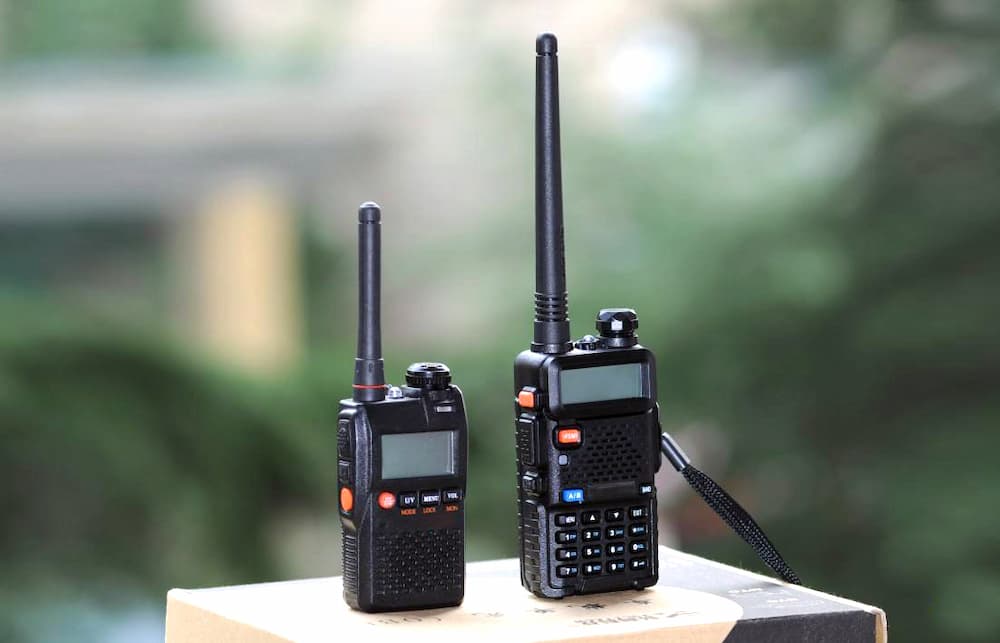
1. Simplex (One-Way Single-Direction Transmission)
Simplex is the simplest radio communication mode withunidirectional signal transmission only. In this mode, devices on the same fixed frequency can only either transmit or receive signals permanently, without any bidirectional interaction. Once one device sends a signal, all other devices on the channel can only listen and cannot reply in real time. It adopts a single-frequency design with low power consumption and simple equipment requirements, but lacks basic interactivity. Typical scenarios include public radio broadcasting and one-way emergency notification broadcasts.
2. Half-Duplex (Time-Sharing Bidirectional Transmission)
Half-duplex is the most mainstream mode for civilian and industrial walkie-talkies, supporting bidirectional communication but not simultaneous operation. All devices share one frequency channel, switching between transmitting and receiving states manually. Similar to a single-lane road with alternating traffic, users press the PTT button to speak (transmit) and release it to listen (receive). This means two users cannot talk at the same time, which may cause occasional call congestion. However, it balances low cost, low power consumption and basic interactive needs, covering most daily team communication scenarios.
3. Full-Duplex (Simultaneous Bidirectional Transmission)
Full-duplex is the most advanced transmission mode, realizingunrestricted simultaneous sending and receiving. It adopts an independent dual-frequency design: one dedicated frequency for signal transmission and another for reception, completely avoiding signal collision and switching delays. Just like ordinary mobile phone calls, both parties can speak and listen in real time without waiting. The only downside is higher hardware costs and power consumption, requiring more sophisticated equipment support.
Practical Selection Guide for Different Scenarios
The best radio mode depends entirely on actual usage scenarios, team needs and budget. The targeted selection suggestions are as follows:
Choose Simplex Radios: Suitable for fixed one-way notification scenarios with no interaction required. It is ideal for community broadcast systems, campus safety announcements, and remote field signal alerts. It is not recommended for team communication that requires real-time dialogue.
Choose Half-Duplex Radios (Most Cost-Effective Option): This is the preferred choice for 90% of civilian and small and medium-sized industrial scenarios, including outdoor self-driving tours, construction site scheduling, property security patrols, hotel and mall service coordination. It meets daily real-time interactive needs with low equipment cost and long battery life, fully matching conventional team work demands.
Choose Full-Duplex Radios: Priority for high-efficiency, high-frequency and emergency professional scenarios. It is suitable for fire rescue, military communication, large-scale event command, and high-end commercial scheduling. Its zero-delay simultaneous dialogue can avoid information omission and command stagnation, which is irreplaceable in emergency and high-precision communication work.
Conclusion
In short, simplex is one-way broadcast, half-duplex is time-sharing bidirectional interaction, and full-duplex is real-time synchronous two-way communication. There is no absolute "best" mode—only the most matching one. Ordinary daily team communication gives priority to cost-effective half-duplex radios; professional emergency and high-efficiency command scenarios require full-duplex equipment; fixed one-way broadcast scenarios can choose simple simplex devices. Accurate selection based on scenario characteristics can maximize radio communication efficiency and save usage costs.



 IPv6 network supported

 Get a Quote